
Defining Your Target Audience and Buyer Personas
Good buyer personas come from interviews, WhatsApp conversations, reviews and real data, not guesswork. Practical steps, a reusable template and two illustrative examples.
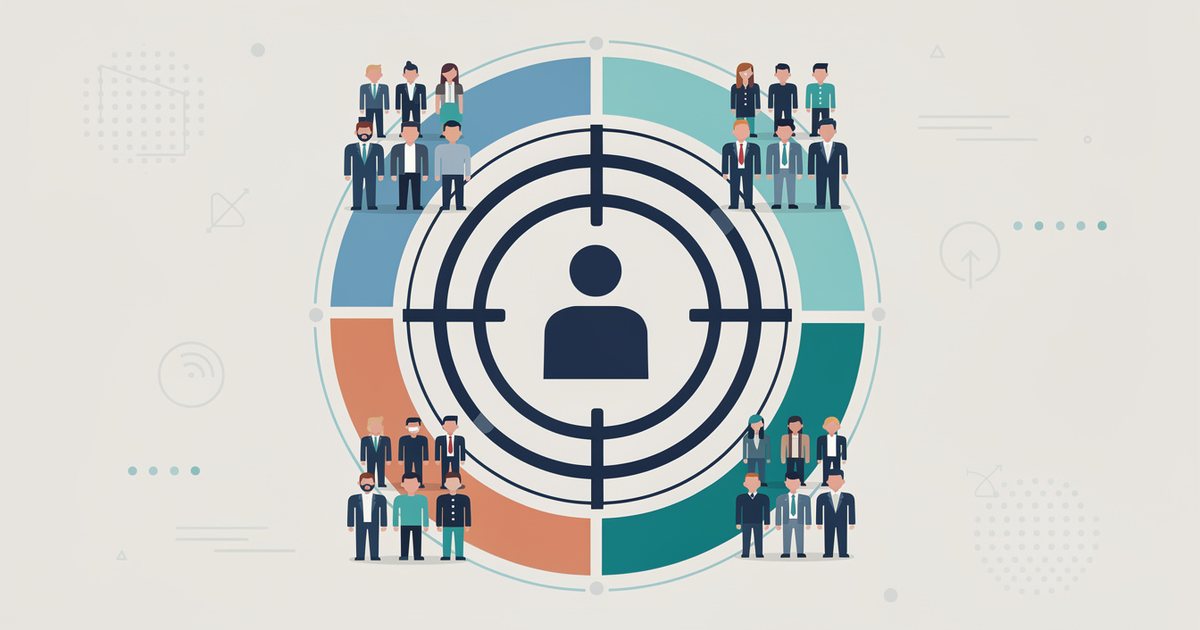
Defining your target audience means knowing precisely who is most likely to buy and benefit from your product, what drives them, where to find them and what they need to hear before deciding. A buyer persona is a tool that gathers this knowledge into one living profile representing a segment of your customers, built on real data rather than guesswork. This guide explains the difference between the two, practical research sources, a ready-to-use persona template with two examples, and how to avoid the stereotypes that ruin the result.
Target audience vs. buyer persona
A target audience is a broad group sharing specific characteristics, for example “working families in Kuwait City with children under ten who buy their supplies online”. This definition helps with ad targeting and estimating market size.
A buyer persona goes further. It describes a typical person within that group: their goals, worries and purchase triggers, the objections that hold them back, the words they use and who shares the decision with them. These details are what copywriters, designers and salespeople need to speak to them persuasively.
The value of a persona shows up in decisions: which message to write, which channel to choose, which objection to answer on the product page, which offer to make. That is why it comes early in the complete digital marketing guide: everything after it depends on it.
Ways to segment a market
You can segment customers on several bases, and combining them works best:
- Demographic: age, gender, marital status, income, occupation.
- Geographic: country, city, district, delivery zone.
- Psychographic: lifestyle, values and priorities such as time, price or status.
- Behavioral: purchase frequency, the occasion they buy for, preferred payment method, brand loyalty.
For most businesses, behavior and need are more useful than demographics alone. Two people of the same age in the same city may buy the same product for entirely different reasons, and each needs a different message. In B2B, add company size, sector and the buyer's role, because decisions there usually involve more than one person.
Research sources: where real knowledge comes from
Customer interviews
A short interview with a real customer is one of the richest sources you have, because it reveals why, not just what. Start with a small number per segment, say five to eight, and stop when answers begin to repeat. Choose a mix of new customers, repeat customers and, if possible, people who enquired but did not buy. Ask permission in advance, explain the purpose, and do not turn the interview into a sales pitch. The skills in conducting a journalistic interview help with open questions and active listening.
Suggested questions:
- What was going on when you started looking for a solution like ours?
- What did you try before us, and why was it not enough?
- How did you search? Where did you look, and who did you ask?
- What almost stopped you from buying?
- Who shared or influenced the decision?
- Why did you choose us over the alternatives in the end?
- How would you describe what we offer to a friend, in your own words?
- What do you wish you had known before buying?
Sales and WhatsApp conversations
For many businesses in the Gulf and Egypt, a significant share of selling happens on WhatsApp, which means you already hold a large archive of customer questions in their own words. Read a sample of recent chats and note the recurring questions, the objections (price, delivery time, cash on delivery, sizing), the phrases people use to describe their need, and when messages arrive. Use WhatsApp Business labels to tag conversation types, and strip out personal data when you copy notes into working documents.
Reviews and comments
Read your own reviews and your competitors' on Google Maps, app stores and major marketplaces. Competitors' middling and negative reviews are especially valuable, because they reveal unmet needs: delays, quality that does not match the photo, weak after-sales service. If you can fix those, you have found both a competitive advantage and a ready-made message.
Analytics and platform data
- An analytics tool such as Google Analytics: cities, devices, languages, traffic sources and most-read pages.
- Store or sales system data: average order value, products bought together, repeat purchase rate, top delivery areas and the share of cash-on-delivery orders.
- Ad platform reports: the age groups and locations that delivered the best cost per conversion in past campaigns.
Data tells you who came and what they did, but not why. Interviews and conversations complement the numbers; they do not replace them.
Sales and customer service teams
The people who talk to customers every day know more than any report. Gather them for an hour and ask: What are the five questions you hear most? Which objection most often kills a sale? Which customers are easy to sell to, and which consume time without result?
A buyer persona template
Use this template and fill each field only with what the evidence supports. When something is a guess, write it as a hypothesis to test later.
| Field | What to write |
|---|---|
| Descriptive name | A description of the situation, not the identity, such as “the last-minute gift buyer” |
| Situation and context | Their work, circumstances and what is on their mind when they think about your product |
| Goal | What they actually want to achieve |
| Problems and frustrations | What annoys them about current options |
| Purchase trigger | The event that makes them start looking now |
| Objections | What might stop them buying from you |
| Decision criteria | What they compare on: price, speed, guarantee, reputation |
| Channels and sources | Where they search and whom they ask |
| Decision influencers | Who shares or approves the decision |
| Language and phrases | Preferred language and real phrases taken from conversations |
| Buying preferences | Payment method, delivery and timing |
| What we tell them | The message, proof and next step that fit them |
Illustrative example 1: a gift and flower shop in Dubai
- Descriptive name: the last-minute gift buyer.
- Context: an employee with long hours who remembers the occasion late and orders from their phone in the evening.
- Goal: a suitable gift delivered the same day, without looking as if they forgot.
- Worries: that the arrangement will not match the photo, or that delivery will be late.
- Trigger: a calendar reminder or a message from a relative.
- Channels: Google searches for same-day flower delivery, and Instagram.
- Payment: card or digital wallet, and they want to finish ordering in two minutes.
- What we tell them: “Order before the cut-off time for delivery today, and we will send you a photo of the gift before it leaves.”
Illustrative example 2: an industrial maintenance company in Egypt
- Descriptive name: the operations manager who fears line stoppages.
- Context: runs production lines in a mid-sized factory and is held accountable for downtime.
- Goal: fewer sudden breakdowns and fast repairs when they happen.
- Frustrations: contractors who miss appointments, and unclear invoices.
- Decision influencers: the factory owner or the finance department that approves the contract.
- Channels: recommendations from peers, Google searches and LinkedIn.
- What we tell them: a preventive maintenance contract with a written response time, photo reports after every visit, and clear pricing that is easy to present to management.
Both examples describe situations and behavior, not nationality, appearance or hobbies unrelated to buying.
Avoiding stereotypes
A persona built on stereotypes is more dangerous than no persona at all, because it gives you false confidence in wrong assumptions.
- Do not infer behavior from nationality, gender or age alone. Assumptions such as “only women buy household supplies” or “young people do not care about quality” may contradict your data entirely.
- Do not assume expatriates prefer English. The Gulf has many Arab residents who prefer Arabic, and many citizens who use English every day. Go back to the data.
- Tie every line to evidence. If you cannot point to an interview, conversation or figure that supports it, it is a hypothesis.
- Skip decorative details. Favorite colors and hobbies add nothing unless they actually affect buying.
- Never use a real person's data. A persona is a composite of recurring patterns and contains no customer names, numbers or photos.
- Use respectful language. Mocking labels in internal documents leak into the tone of your ads.
It also helps to define a negative persona: someone you do not want to target, such as a buyer looking only for the lowest price when your model is built on quality. Knowing who it is saves ad budget and sales time.
From persona to marketing decisions
A persona sitting in a file nobody opens is worthless. Here is how insights turn into decisions:
| What you learned | Marketing decision |
|---|---|
| Worries the gift will not match the photo | A real photo before delivery, mentioned in the ad and on the product page |
| Searches Google with specific phrases | Add those phrases to your Search keywords, as in the Google Ads guide |
| Browses Instagram in the evening | Schedule ads and content for evenings, and test it in Meta ads |
| Needs finance department approval | A short proposal that is easy to pass around internally |
| Always asks about cash on delivery | State payment options clearly in the ad and the FAQ |
The persona then becomes the basis of a clear marketing message and of the content pillars in your monthly content plan. If your audience is young and watches short video, apply what you know about their language and habits in TikTok and Snapchat ads.
How many personas, and how to keep them accurate
- Two to four personas are enough for most small and medium businesses. Rank them by current or expected revenue and start with the most important.
- Test them in the market: run ads aimed at each persona with a different message and compare results. If nobody responds to a persona's message, the persona itself may be wrong. Measuring campaign results explains how to compare.
- Update them regularly: review every six to twelve months, and whenever you enter a new market, launch a new product or notice customers asking different questions.
- Keep them visible: one page per persona, known to everyone who writes, designs or sells for the company.
Practical checklist
- Have you defined the target audience with characteristics you can target and measure?
- Have you interviewed real customers and read a sample of WhatsApp chats and reviews?
- Is the template filled with supported information, with assumptions clearly marked?
- Does each persona include triggers, objections, decision criteria and who is involved?
- Is it free of stereotypes and details that do not affect buying?
- Have you defined at least one negative persona?
- Has each persona been turned into decisions on message, channels, content and offers?
- Have you scheduled a date to review the personas and test them with ads?