Writing Compelling Headlines Without Clickbait
How to write headlines that earn the click and keep the promise: clarity versus curiosity, front-loading, length for each platform, testing, and why clickbait backfires.
A headline is the first thing your audience reads and often the only thing. Good headline writing is not about hype. It is about making a clear, specific promise that the text then keeps in full: the headline tells readers what the piece is about, why it matters to them, and gives them a reason to click or keep reading. This guide sets out practical rules that work for news stories, articles, search results and social posts, with notes on writing headlines in Arabic.
A headline is a promise the text must keep
A headline has four jobs: tell readers the subject or the news, select its audience, spark interest, and set expectations. Fail the last one and the first three stop mattering, because a reader who feels tricked does not come back.
Different pieces call for different headline types:
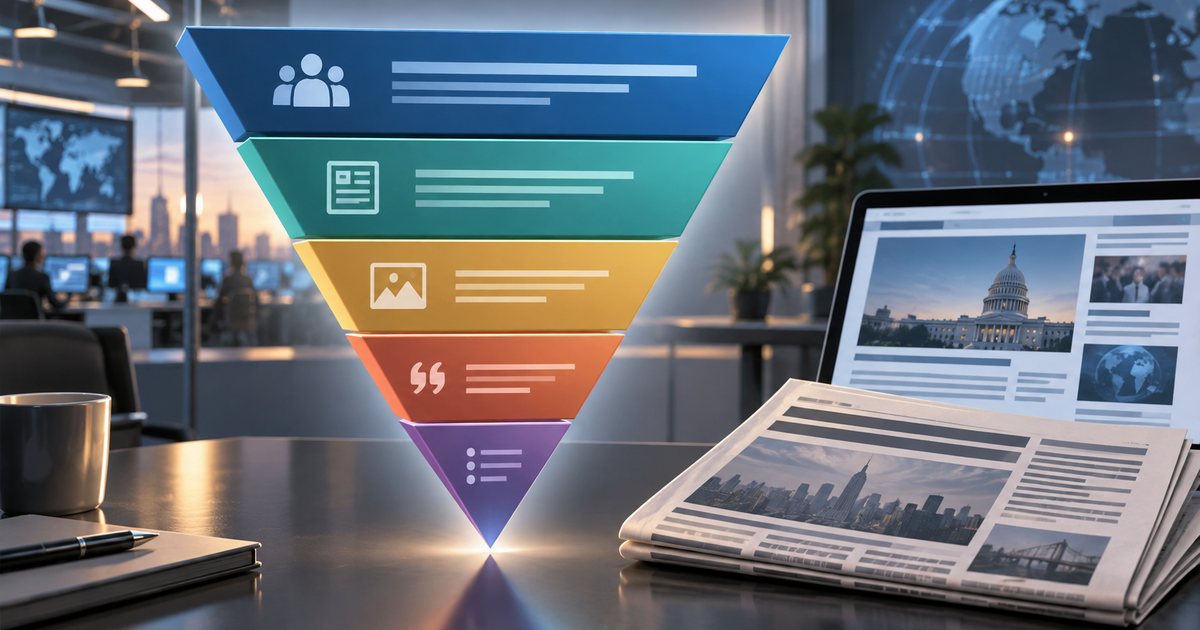
- News headline: summarizes the event in one line and extends the lead, as explained in the inverted pyramid.
- How-to headline: promises a method or fix, such as "How to prepare your logo file for print".
- List headline: promises a set number of points, such as "5 mistakes in smartphone product photos".
- Question headline: asks what is already on the reader's mind. It works only when the text gives a clear answer.
- Quote headline: puts a source's words in quotation marks. The quote must be exact and in context.
A working habit: write a provisional headline before drafting to keep you on track, then rewrite it once the piece is finished so it matches what you actually wrote. Draft at least five options before choosing. This is one of the editing basics covered in the complete guide to journalism and content writing.
Clarity first, then curiosity
Clarity means readers know from the headline alone what the piece covers and who it is for. Curiosity means they still have a reason to read. The right balance keeps the subject completely clear and saves the curiosity for the details.
| Vague | Clear | Clear and compelling |
|---|---|---|
| You won't believe what this store did | Perfume store changes its checkout page | 3 checkout page fixes that can reduce abandoned carts |
| The secret to pro photos | Tips for product photography | Phone product photos: 5 mistakes that make them look cheap |
| Are you losing customers? | Why WhatsApp reply rates drop | Why customers ignore your WhatsApp messages and what to do about it |
The vague headline relies on teasing alone; the clear one is accurate but flat; the third combines clarity with a specific benefit. The fairness test is simple: after reading the full piece, would the reader feel the headline was honest?
Numbers and specificity
Specificity builds trust. A specific headline tells readers exactly what they will get, so they can decide quickly whether it is for them.
- Numbers: "7 steps", "in 30 minutes" or "on a 500 AED budget" set a concrete expectation. Use numerals rather than words; they are faster to scan.
- Audience: "A pricing guide for restaurant owners in Kuwait" beats "A pricing guide" because the right reader recognizes themselves.
- Outcome: name the result, as in "Sharp product photos with nothing but window light".
- Strong verbs: "launches", "cuts" and "bans" say more than "discusses" or "looks at".
Do not inflate numbers. If you have five genuine points, do not pad the list to ten. Readers notice filler, and it costs you trust on the next headline.
Put the important words first
Readers scan headlines rather than read them, and search results and link previews cut off the end of long ones. So put the words that define the topic at the start.
- "Pricing digital products: 4 models for small stores" works better than "4 models small stores can use for pricing digital products".
- Skip empty openers that burn the first words, such as "Everything you need to know about".
- If the topic has a name people search for, get it into the first half of the headline. This connects directly to writing for search engines without losing the reader.
The right length for each platform
There is no single ideal length, only the length that fits where the headline will appear.
| Where it appears | Practical guidance |
|---|---|
| Search results | Cut off by pixel width, usually around 50 to 60 characters; put the core first and check with a preview tool |
| Social link cards | Still makes sense if the second half is cut |
| Short-video cover | 3 to 6 words in large type, readable on a small screen |
| Email subject line | The idea in the first words, because mobile inboxes truncate the rest |
| Notifications and WhatsApp messages | One sentence that carries the whole story |
The title tag shown in search results can differ from the headline at the top of the article: the first is shorter and built around the search phrase, the second can be longer and more descriptive. Search engines may rewrite a title they consider misleading or stuffed with keywords, which is one more reason to be accurate. Display limits change from time to time, so confirm them in each platform's current help pages.
Test, and let readers choose
- Pre-test: show three options to a colleague who has not read the piece and ask what they expect to find. If their answer does not match the text, the headline needs work.
- A/B testing: some content management systems and email tools show two headlines to two samples of the audience, then use the winner.
- Search data: in Google Search Console, watch click-through rate (CTR) per page. High impressions with weak clicks suggest trying a clearer title. Change one thing at a time and wait a few weeks before judging.
- After the click: measure reading time and scroll depth. A headline that lifts clicks but cuts reading has failed, because it promised something the text did not deliver.
Why clickbait backfires
Clickbait withholds or exaggerates information to force the click, then fails to deliver. It may lift clicks for a day, but the costs add up:
- Readers leave quickly, a clear sign the page did not meet their need.
- Trust in the brand or publication erodes, so audiences start ignoring even honest headlines.
- Social platforms have announced policies to reduce the reach of content that baits clicks or engagement.
- In news, health and finance, a misleading headline can cause real harm, an ethical question discussed in journalism and media ethics.
Avoid these patterns: "you won't believe", "shocking", "what happened next will amaze you", strings of exclamation marks, trailing ellipses used as a tease, question headlines whose honest answer is "no", and quotes lifted out of context.
Headline style in Arabic
Arabic headlines follow their own conventions, and a bilingual publisher needs to respect both languages rather than translating one into the other.
- Concise formal Arabic: professional headlines use Modern Standard Arabic, not dialect, with few and precise words.
- Direct news structure: Arabic news headlines commonly open with the actor followed by a present-tense verb (literally "Ministry of Health launches appointments platform"), which gives the news immediacy.
- Cut padding: constructions equivalent to "the company carried out the launching of an app" become "company launches app".
- Avoid long chains of possessive nouns, which are easy to build in Arabic and hard to read. Reorder the phrase or split details between the headline and the subheading.
- Punctuation: a colon separates topic from detail, and Arabic guillemets mark quotations. Keep exclamation marks to a minimum.
- Numerals and spelling: use one numeral system across the site and double-check hamza placement and taa marbuta, because an error in a headline is more visible than anywhere else.
- Subheadings: use them for the context that does not fit, instead of stretching the main headline.
- The English version: do not translate the Arabic headline literally. Rewrite it for the English reader, following your style guide on sentence case or title case.
Headline checklist before publishing
- Can readers tell what the piece is about from the headline alone?
- Does the text deliver everything the headline promises?
- Are the most important words at the start?
- Have you added a number, audience or concrete outcome where it helps?
- Does the core survive truncation in search results and link cards?
- Is it free of exaggeration, shock words and exclamation marks?
- Is the verb strong and specific?
- Is the Arabic version formal, concise and correctly spelled?
- Did you write at least five options before choosing?
- Have you decided how you will judge its performance after publishing?