Writing a Press Release Journalists Will Actually Use
A press release, part by part: what makes it newsworthy and how to send it and follow up without annoying journalists, with a complete sample for a fictional company.
Press release writing decides whether your company's news gets published or sinks among the dozens of emails a journalist receives every day. A press release is a short document an organization issues to tell the media about news, written so a journalist can grasp it in seconds and use it with minimal editing. The releases that get used carry real news written in the language of journalism, not advertising written in the language of marketing. This guide takes a release apart piece by piece, shows a complete sample, and ends with the etiquette of sending and following up.
When does something deserve a press release?
The first decision is whether you actually have news. Journalists judge a release by the same criteria they apply to any story, the news values explained in the complete guide to journalism and content writing. Topics that usually justify a release include:
- A genuinely new product or service, not a minor update to an existing one.
- Expansion into a new city or country, or a new branch that serves a new audience.
- A partnership with a concrete outcome readers can understand.
- A funding round, published financial results or a senior appointment.
- A public event, or a community initiative with a measurable impact.
- Data or research the organization produced itself, provided the method is clear and can be explained.
Website redesigns, holiday greetings and announcements about how "proud" the company is of an achievement nobody outside it cares about do not qualify. The simple test: would a reader who doesn't know your company, and owes it nothing, care about this? If not, it belongs on your social accounts, not in a press release.
The structure of a press release, part by part
Press releases follow a near-standard structure that journalists know well. Sticking to it saves them time and raises the chance your release gets used.
Release status line
At the top: "FOR IMMEDIATE RELEASE" if the news can be published right away, or an embargo line if it has a set release time (more on that below).
Headline
The headline states the news in one sentence: who did what. Use a strong verb and drop marketing adjectives like "leading," "best-in-class" or "unique." They make a release read like an ad, and journalists will cut them anyway. General headline rules are covered in writing compelling headlines without clickbait.
Sub-head
One line that adds the next most important fact: a number, a date or a detail that shows the impact. It shouldn't just rephrase the headline.
Dateline
The first paragraph opens with the city the news comes from and the release date, for example: "AJMAN, United Arab Emirates, 5 October 2026:". It tells the journalist immediately where the story is and how fresh it is.
Lead paragraph
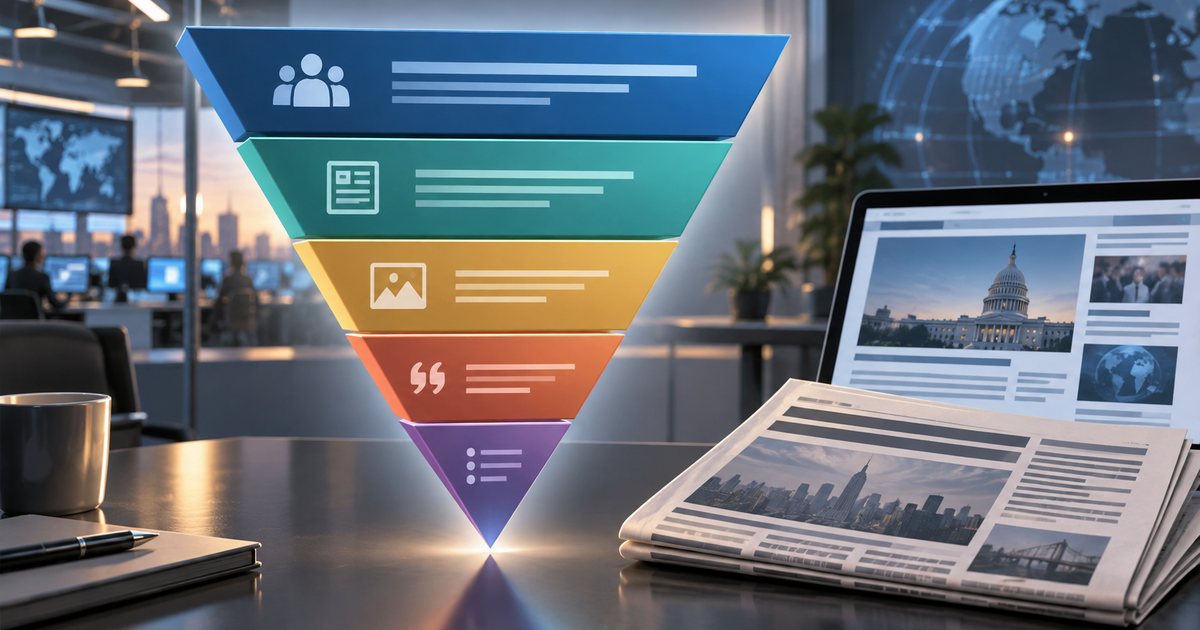
The most important paragraph in the release, written in inverted pyramid style: who, what, when, where and why, in one or two sentences. If a journalist reads only this paragraph, they should know the whole story in essence. Don't open with the company's history, vision or ceremonial phrases.
Quotes
One or two quotes from someone with standing: the CEO, the project lead, a partner or a customer. A good quote adds explanation, perspective or human feeling that the factual paragraphs can't carry. "We are proud of this step, which reflects our commitment to excellence" says nothing, and nobody will use it. Make sure the person quoted approves the wording before you send it.
Supporting details
Figures, dates, locations and how to access the service or attend the event, from most to least important. Keep paragraphs short, and give journalists everything they need to write a story without having to call you for something obvious.
Boilerplate
A standard closing paragraph headed "About" plus the company name, which describes the organization in a few lines: when it was founded, what it does, where it operates. Keep it factual, reuse it in every release, and update it when the facts change.
Media contact
The name, title and email of the person responsible, plus a phone number that is actually answered on the day of release and after. A release without a clear contact loses half its value: a journalist who wants an interview or another photo has nobody to ask.
End mark
Close with a conventional end mark such as "ENDS" or three hash signs (###), so readers know that anything after it is notes to editors, not part of the story.
Embargoes
An embargo means sending the release to journalists before the announcement, with an explicit request not to publish before a set time, for example: "EMBARGOED UNTIL 9:00 a.m. UAE time, Sunday 5 October 2026." The idea is to give journalists time to prepare a fuller story and to have the news appear everywhere at the same moment.
An embargo is a professional agreement built on trust, so:
- Use it only for news that genuinely benefits from preparation, such as financial results or a major launch.
- State the time and time zone clearly, especially when you send to outlets in several countries across the region.
- Ideally, confirm that a journalist accepts the embargo before sending, rather than imposing it after the email lands.
- Don't post the news on your own site or accounts before the embargo lifts. It embarrasses the journalists who kept their word.
Sample press release for a fictional company
The sample below is entirely fictional; the company, names and figures were invented for illustration.
FOR IMMEDIATE RELEASE
Headline: Bustan launches local farm produce delivery in Kuwait, with ordering via WhatsApp
Sub-head: Company signs up 40 Kuwaiti farms and offers same-day delivery on orders placed before noon
KUWAIT CITY, 5 October 2026: Bustan, a company that delivers fruit and vegetables from local farms, launched its service in Kuwait today after signing agreements with 40 Kuwaiti farms. Customers can order through the company's app or via WhatsApp, with same-day delivery for orders received before 12 noon.
The service starts in the Capital and Hawalli governorates and will expand gradually to the rest of the country, with payment by card or cash on delivery.
"Many of our customers in Kuwait ask where their vegetables come from before they ask the price, so we started with local farms," said Laila Al Rashed, CEO of Bustan. "Every box carries the name of the farm it came from."
"We used to sell most of our crop to a wholesaler," said Salem Al Enezi, owner of one of the partner farms. "Now we know where our produce goes and when we need to plant more."
The company has created 25 new jobs in Kuwait in delivery and customer service.
About Bustan: Founded in Ajman in 2022, Bustan connects consumers with local farms through an app and a WhatsApp ordering service. It operates in the UAE and Kuwait.
Media contact: Mariam Hassan, Media Relations Officer, with the press office email and a direct phone number.
ENDS
Why does this work? The headline carries the news with a clear verb. The lead answers the key questions in one sentence. There are two numbers readers grasp instantly (40 farms, 25 jobs). The two quotes add meaning rather than repetition: one explains the decision, the other brings in a voice from outside the company. And there isn't a single marketing adjective in it.
Distribution and follow-up etiquette
Writing the release is half the job. The other half is getting it to the right person in the right way:
- Send to a curated list: journalists who actually cover your field, not every address you can find. A release about a delivery service interests business, technology and local-news reporters, not sports editors.
- Keep the email short and personal: two lines on why the story matters to this outlet's audience, then the release text in the body of the email, not only as an attachment.
- Use the headline as the subject line: never just "Press release."
- Prepare high-resolution images: product, event or spokesperson photos, with the photographer's credit and usage rights stated. A download link beats heavy attachments.
- Time it carefully: avoid the weekend in the target country (weekends differ across the region), and remember that working hours change during Ramadan and Eid.
- Write each language natively: if you are sending to both Arabic and English media, produce two versions with the same facts, and spell names identically in both.
- Follow up once, politely: a day or two later, with a short note offering something extra, such as an interview with the spokesperson or an exclusive photo. Don't ask "Are you going to run it?" and don't keep calling.
Some professional basics: don't ask to review the story before publication, never link coverage to paid advertising, and respect a journalist's decision if they don't find the story newsworthy. Building long-term relationships with the media is covered in PR and media relations.
Mistakes that kill a release
- No news: a whole release about the company's "commitment to quality."
- Advertising language: superlatives, exclamation marks and vague promises. If your core message itself is fuzzy, start with crafting a clear marketing message, then turn it into facts for the release.
- Burying the news: two paragraphs of company history before anything new.
- Empty quotes: generic lines that could come from any company on any occasion.
- Errors in names and numbers: one mistake makes the journalist doubt the whole release.
- Claims you can't back up: "the first of its kind in the region" with no evidence. Serious journalists will check, and it will hurt your reputation.
- No media contact, or a phone number nobody answers.
Checklist before you hit send
- Is there real news that matters to a reader who doesn't know the company?
- Does the headline state the news with a clear verb and no marketing adjectives?
- Does the lead paragraph answer the key questions?
- Do the quotes add meaning, and have the speakers approved them?
- Have you checked every name, number and date twice?
- Is the boilerplate current, and is the media contact actually reachable?
- Is the release status clear: for immediate release, or embargoed with a stated time and time zone?
- Is the list curated, the email short and the images ready?