Video Ad Production: From Idea to Publication, Step by Step
A successful ad is built weeks before the shoot. A practical map of video ad production from brief to testing, with what gets approved at each stage and the mistakes that cost time and money.

Video ad production doesn't start with a camera and doesn't end with the edit. It starts with a clear brief that sets the objective, audience and message, runs through concept, script, pre-production, the shoot and post-production, and carries on after launch with testing and refinement. Most problems that surface in the edit suite, such as missing shots, no vertical version or client revisions that never end, come from a decision nobody made early enough. This guide walks through each stage, what should be approved at each one, and the mistakes that cost time and money.
The stages at a glance
| Stage | Output | Who approves |
|---|---|---|
| Brief | A creative brief document | The client or marketing lead |
| Concept | One or two ideas with visual references | The client |
| Script and storyboard | Two-column script and frames | The client, plus legal review where needed |
| Pre-production | Cast, locations, schedule, shot list | The pre-production meeting |
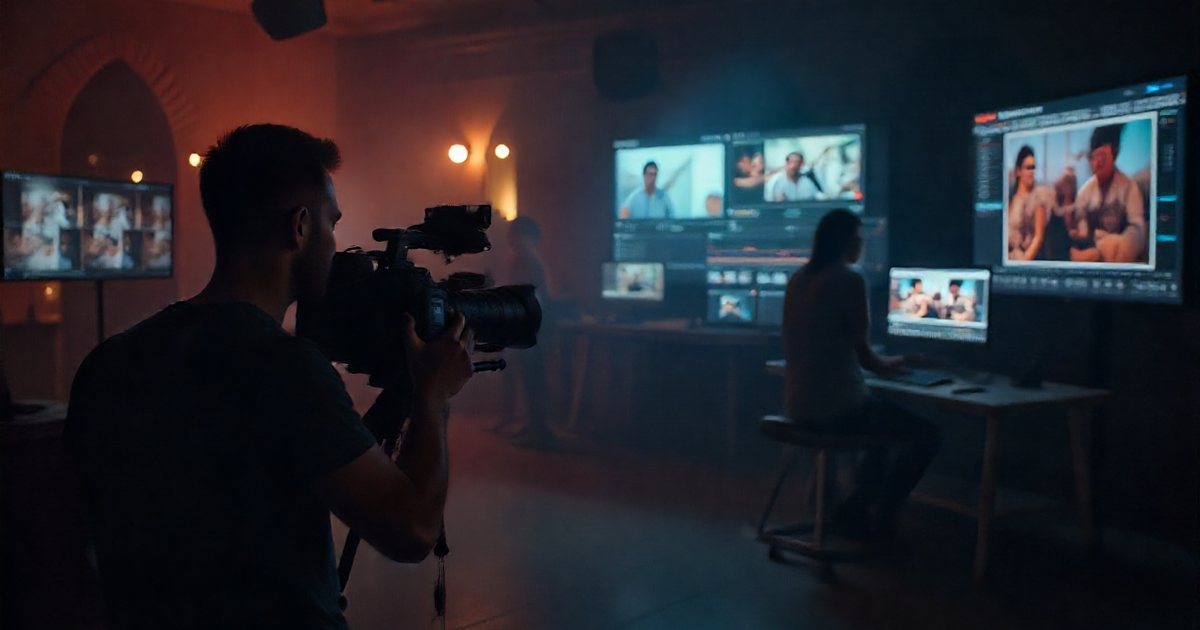
| Shoot | Footage and sound | The director with one client representative |
| Post-production | Edit, color, sound, versions | The client, over a fixed number of rounds |
| Delivery | Files to each platform's specs | The campaign team |
| Testing | Variations and measured results | The marketing team |
If you want to understand editing itself in depth, start with Video Editing: The Complete Beginner's Guide.
1. The creative brief
The brief is the creative contract between client and production team. It should answer:
- Objective: brand awareness, sales, app installs or store visits. Each objective changes what the ad looks like.
- Audience: who they are, where they watch and which dialect they speak. See Defining Your Target Audience and Buyer Personas.
- One message: what is the single thing viewers should remember? See Crafting a Clear Marketing Message.
- Placements: the platforms and ad positions, which determine the lengths and sizes you need.
- Mandatories: logo, price, offer dates, legal lines and any brand-guideline requirements.
- Budget, timeline and launch date, plus the names of whoever gives final approval.
The most important part of the brief for the editor is the complete list of deliverables before the shoot. A vertical version nobody planned for can't always be cropped out of horizontal footage. How to Write a Design Brief is useful for writing a good brief, even for video.
2. The concept
- Put the idea in one sentence. If it needs a paragraph, it isn't ready.
- Present two or three routes with a mood board and examples of the shooting style and pace.
- Test each route with practical questions: does the message land in the first seconds? Can it be made within the budget and time? Does it work without sound? Will it cut down to shorter versions?
- Plan seasonal work early. Ramadan and Eid campaigns need production to start well ahead of the season, as Planning Seasonal Campaigns explains.
3. Script and storyboard
The two-column script
Ad scripts are usually written in two columns: picture on one side, sound (dialogue, voice-over, music and effects) on the other, line by line. The format makes every second clear to the client, director and editor alike.
A rough rule for length: a comfortable read fits about two to two and a half words per second, so roughly 60 to 75 words for a 30-second spot, and fewer if you want room for music and breathing. The more reliable method is to read the script aloud against a stopwatch, in the right dialect and at the right pace. For the writing itself, see Ad Copywriting: Proven Formulas.
While writing:
- Put the hook in the first two or three seconds.
- Show the product or brand early.
- Stick to one call to action.
- Write the shorter versions now, not after the shoot.
Storyboard and animatic
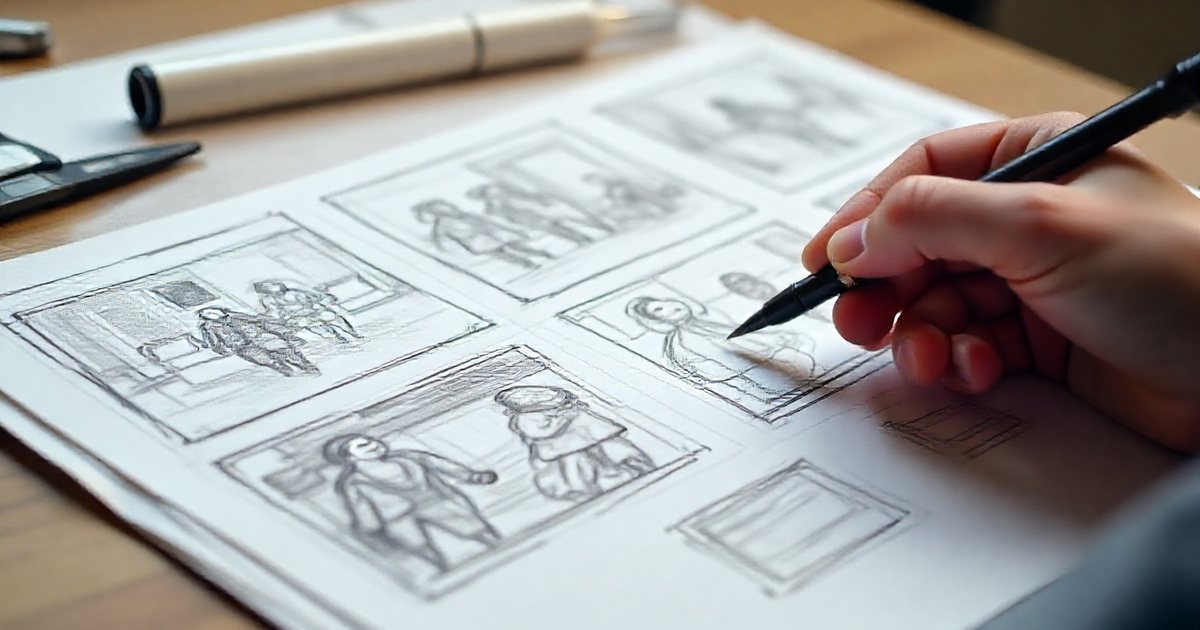
The storyboard draws every shot: its size, angle, camera movement and any on-screen text. You can turn it into an animatic by laying the frames on a timeline with a temporary voice-over, which lets you test timing before any major spending. Storyboarding: Planning Scenes Before You Animate covers the process.
4. Pre-production
Casting
- Cast faces and dialects that genuinely reflect your audience; Gulf viewers notice quickly when a dialect doesn't fit.
- Define usage rights in the contract: media (digital, TV, outdoor), countries and duration. An ad still running after the rights have expired is a common and expensive mistake.
- Get a signed release from everyone clearly shown on screen. If the ad features an influencer, see Influencer Marketing: How to Choose and Measure.
Locations
- Scout at the same time of day you plan to shoot, so you see the real light and noise.
- Get written permission from the owner or management.
- Check power, parking and noise sources such as air conditioning and traffic, and plan around prayer times.
- In a Gulf summer, exterior shoots suit the early morning, with a clear plan for shade, water and breaks.
Permits
Many cities require permits for filming in public places or flying drones, and some ad categories need content approval in advance. Authorities and requirements vary by country, and even by emirate or governorate, so check early with the competent authority; approvals take time.
Schedule and shot list
- A shot list ordered by location and lighting setup, not by the order shots appear in the ad.
- A call sheet with times, addresses and contact numbers for everyone.
- Wardrobe and props, plus enough product samples, clean and with intact labels.
- The pre-production meeting (PPM): everything is signed off with the client here: cast, locations, wardrobe, storyboard and schedule. Any change after it has a clear cost.
5. The shoot day
- Shoot the essentials first: the hero product shot and key lines, before the light changes or time runs out.
- Get full coverage of every scene in different sizes and angles, and shoot the planned vertical versions.
- Allow proper time for the packshot, with deliberate lighting and a clean background.
- Record clean sound, and capture more than one read of important lines so the editor has options to test later.
- One client representative watches the monitor and approves on set, instead of several opinions gathered afterwards.
- Back up footage on set before any card is formatted.
Shooting for the Edit explains how to capture footage that makes the edit easier.
6. Post-production and versions
Post-production usually runs in this order: first cut, client review, picture lock, color (Color Correction and Color Grading), sound, voice-over and mix (Audio in Video), on-screen text and legal lines, subtitles (Subtitles and On-Screen Text), and finally the versions.
The versions matrix
Illustrative example: a campaign needs three lengths (30, 15 and 6 seconds), three aspect ratios (16:9, 9:16 and 4:5) and two languages (Arabic and English). That comes to 3 × 3 × 2 = 18 files, before any test variations. This is why the matrix belongs in the brief, not on delivery day.
| Length | Common use | What fits |
|---|---|---|
| 6 seconds | Short reminder ads | One image, one message, the brand |
| 15 seconds | Vertical placements and stories | Hook, benefit, call to action |
| 30 seconds | YouTube, TV, some social placements | A complete short story |
| 60 seconds or more | Brand stories and launches | Wider narrative and more detail |
A short version isn't a mechanical trim of the long one but a story in its own right, as Storytelling in Video Editing explains. For aspect ratios, 16:9 is common for YouTube and screens, 9:16 for vertical video and stories, and 1:1 or 4:5 for feed posts; confirm each platform's current specs.
7. Review rounds and approvals
- Set the number of revision rounds in the agreement for each stage, such as two rounds on the edit and one on color.
- Ask for consolidated feedback from one person, with a timecode for each note.
- Send light review copies with visible timecode and a watermark.
- Record every approval in writing, even as a short email.
- Have claims and offers reviewed, such as "best", "free", health claims and prices, and check advertising requirements with the competent authority in your country.
8. Delivery specs
- Prepare a spec sheet for each platform: aspect ratio, resolution, length, file-size limit, safe zones and captions. These values change, so confirm them in current help pages.
- Follow a clear naming convention that states length, ratio, language and version.
- Deliver a master and a textless version, plus subtitle files and suggested thumbnails.
Technical export settings are in Video Export Settings.
9. Testing and improving
- Plan variations at the script stage: two or three hooks, two different calls to action, a version with the price and one without.
- Change one variable per test so you know what caused the difference.
- Give each variation enough budget and time before judging it.
- Track the right metrics: the share of viewers who get past the opening seconds, average watch time, click-through rate, cost per result and conversions. Measuring Campaign Results explains how to read them.
- Refresh creative when fatigue sets in, that is, when frequency climbs and results fall.
- Feed the lessons into the next brief. Today's best hook is the starting point for tomorrow's campaign.
Mistakes that cost time and money
- Starting the shoot without a script approved in writing.
- Not planning vertical versions from the start.
- Trying to say too many things in one ad.
- No clear decision-maker, so revision rounds never end.
- Forgetting when music and talent rights expire.
- Leaving a Ramadan ad until the final weeks before the season.
Practical checklist
- Does the brief define the objective, audience, single message and deliverables matrix?
- Were the script and storyboard approved in writing before any bookings?
- Are usage rights for talent, music and locations, and any permits, settled?
- Does the shot list include vertical versions and the packshot?
- Are the number of revision rounds and the decision-maker agreed?
- Have claims, prices and legal lines been reviewed?
- Does every file match its platform's specs and carry a clear name?
- Did you plan test variations and how to measure them before launch?