Video Editing Software: A Practical Comparison
No editor is perfect for everyone. Get to know the common programs and what each does well, plus practical criteria for choosing one that fits your computer, work and team.
"Which is the best video editing software?" is one of the most common beginner questions, and the honest answer is that no program is best for everyone. There is only the one that fits your computer, your type of work and the team you work with. The common professional editors can all produce excellent work; the real differences are in workflow, integration with other tools and hardware demands. This article describes the most widely used programs neutrally, then gives practical selection criteria and a way to test a program before you commit.
What every editor has in common
Before comparing, it helps to know that the foundation is the same everywhere: a timeline with video and audio tracks, cutting and trimming tools, color correction, audio mixing, titles and export. Core shortcuts, such as J, K and L for playback and I and O for marking in and out points, are similar in most of them. What you learn in one program comes with you to the next, and most professional editors use more than one program over their careers. The shared concepts are explained in Video Editing: The Complete Beginner's Guide.
The most widely used programs
Adobe Premiere Pro
Runs on Windows and macOS and is widespread in advertising agencies and content teams. Its standout feature is integration with other Adobe applications, such as After Effects for motion graphics, Photoshop for images and Audition for audio, so files move between them easily. It suits teams already working within the Adobe ecosystem, and it has a large library of tutorials and plug-ins.
DaVinci Resolve
Made by Blackmagic Design and available on Windows, macOS and Linux. It grew out of color correction, so its color tools are among its biggest strengths, and it combines pages for editing, color, visual effects (Fusion), audio (Fairlight) and delivery in a single application. There is a free version and a paid version with extra capabilities, so check the current differences between them. It leans heavily on the graphics processor (GPU), and a weak machine limits how smoothly it runs.
Final Cut Pro
Made by Apple, it runs on Mac, with a version for iPad. It is known for its "magnetic" timeline, which arranges clips automatically and prevents gaps, and for smooth performance on Apple hardware. It suits freelancers and small studios working on Macs, but it isn't available on Windows, which matters if your team is mixed.
CapCut
Available on phones, desktop computers and in the browser, and aimed mainly at short-form video: templates, automatic captions, and trending effects and text styles. It is very fast for social media content but less flexible for long, complex projects. Before relying on it for client work, check its commercial use terms, the licensing of its built-in assets, and its availability in your country.
Other programs worth knowing
- Avid Media Composer: established in film, television and long-form production, and strong in team workflows on shared storage.
- LumaFusion: an advanced editor for phones and tablets on iOS and Android, well suited to mobile journalists and field work.
- iMovie: a simple Apple editor for Mac and iPhone, fine for the very first steps.
- Kdenlive and Shotcut: free, open-source editors that run on Windows, macOS and Linux.
| Program | Platforms | Known for | Often suits |
|---|---|---|---|
| Premiere Pro | Windows, macOS | Integration with Adobe apps | Agencies and content teams |
| DaVinci Resolve | Windows, macOS, Linux | Color tools and an all-in-one design | Those who want color and audio in one program |
| Final Cut Pro | macOS, iPad | Speed and the magnetic timeline | Freelancers and Mac-based studios |
| CapCut | Mobile, desktop, browser | Templates and auto-captions | Short-form creators |
| Avid Media Composer | Windows, macOS | Team workflows and long-form | Television and film |
| LumaFusion | iOS, Android | Advanced editing on a phone | Field work |
The table describes rather than ranks, and features and supported platforms change between versions, so confirm them on each program's official site.
Selection criteria
Operating system and hardware
Start with what you actually own. A program that doesn't run smoothly on your machine will slow you down whatever its features. Pay attention to:
- Memory and graphics processor: effects, color work and 4K footage use a lot of resources.
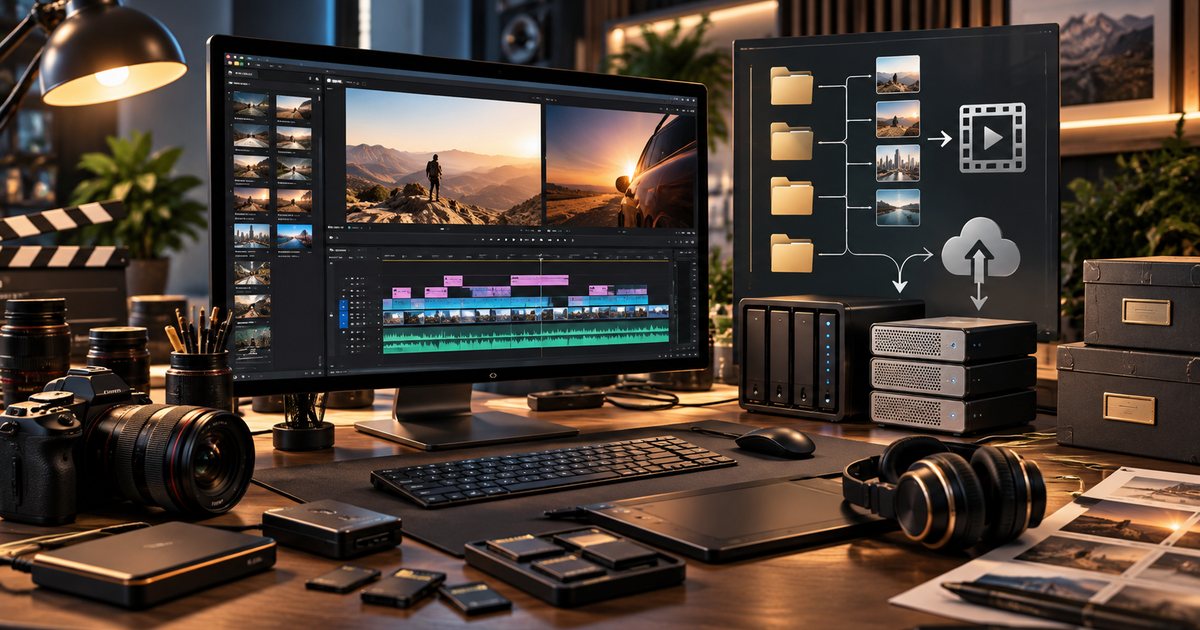
- Storage: a separate SSD for footage makes playback far smoother.
- Codecs: H.265 footage from phones and cameras needs hardware decoding support to play smoothly; without it, work with proxies.
Type of work
Daily short videos for restaurant and shop accounts are a different job from a TV commercial or a documentary. Short-form tools save time with templates, while professional editors give finer control over long, layered projects. If your work relies heavily on motion graphics, look at how well the editor integrates with animation tools, as discussed in Motion Graphics and Animation Software.
Collaboration and file exchange
If you work in an agency or alongside other freelancers, the shared program matters more than your personal preference. Ask:
- Can more than one editor work on the same project?
- Can the project be handed to a colourist or sound mixer using another program, through exchange formats such as XML, AAF or EDL?
- Does the whole team use the same file organization system? That is the subject of Organizing an Editing Project and Its Files.
Color and audio needs
If color is central to your work, as with high-end ads, look for complete scopes, secondary correction, LUT support and color management, as covered in Color Correction and Color Grading. If audio is central, as with interviews and video podcasts, check the noise reduction tools and loudness metering described in Audio in Video: Dialogue, Music and Effects.
Arabic text support
This criterion is often overlooked in the region until it causes problems late in a project. Historically, some text tools in video applications did not render Arabic correctly: letters appeared disconnected or reversed, diacritics disappeared, or numbers and English words inside an Arabic sentence ended up in the wrong order. Support has improved in many programs, but it varies between programs and versions, so test it yourself with:
- An Arabic title set in the brand's typeface.
- A sentence mixing Arabic, English and numbers.
- An Arabic subtitle file (such as SRT) imported onto the timeline.
The full rules for subtitling are in Subtitles and On-Screen Text.
Learning resources and the job market
Look at job ads in your city: which programs do agencies and production companies in Dubai, Kuwait or Cairo ask for? Check that good tutorials exist, in Arabic or English, for the program you are considering. A program that is common in your local market makes it easier to collaborate and to find work.
Licensing model
Licensing varies between subscriptions, one-time purchases and free versions, and prices and terms change over time. Compare the cost over two or three years rather than one month, and make sure the license allows commercial use if you work for clients.
Typical selection scenarios
These are illustrative examples of the reasoning, not binding recommendations:
- A freelancer on a mid-range Windows laptop making short content for restaurants: needs a program that runs smoothly on that machine with proxies, reusable templates and solid Arabic text support.
- A small, all-Mac studio producing corporate videos: Mac-focused editors may offer good speed and performance, as long as they fit the way clients and collaborators exchange files.
- An agency team whose designers work in Adobe apps: integration between the editor and the design and animation tools saves time on every project.
- A project that needs advanced grading and precise audio mixing: a program that combines color and sound in one place reduces switching between applications.
- A creator who shoots, edits and posts from a phone: a mobile editor may be all they need, moving bigger projects to a computer when necessary.
Test before you commit
Most programs offer a free version or a trial period. Don't judge a program by promotional clips or other people's opinions; run a small test project with your own real material:
- Import footage from your actual camera or phone and note how smoothly it plays.
- Edit a three-minute video with simple cuts and transitions.
- Add an Arabic title and both Arabic and English subtitles.
- Correct the color of two shots and match them.
- Clean up a dialogue clip and lay music underneath.
- Export a horizontal 16:9 version and a vertical 9:16 version.
Note where you got stuck and how long each part took. Two days of this reveal more than dozens of comparison articles, and if short-form content is your main work, pair it with Editing Short-Form Video: Reels, TikTok and Shorts.
Practical decision checklist
- Does the program run smoothly on your current machine with your real footage?
- Does it suit the work you do most of the time, not the exception?
- Is it used by your team, your clients or your collaborators?
- Does it display Arabic text and Arabic subtitles correctly?
- Does it meet your color and audio needs, or integrate with tools that do?
- Are good tutorials available, and is it in demand in your local job market?
- Does the licensing model fit your budget over the medium term and allow commercial use?
- Have you actually tried it on a complete test project before committing?