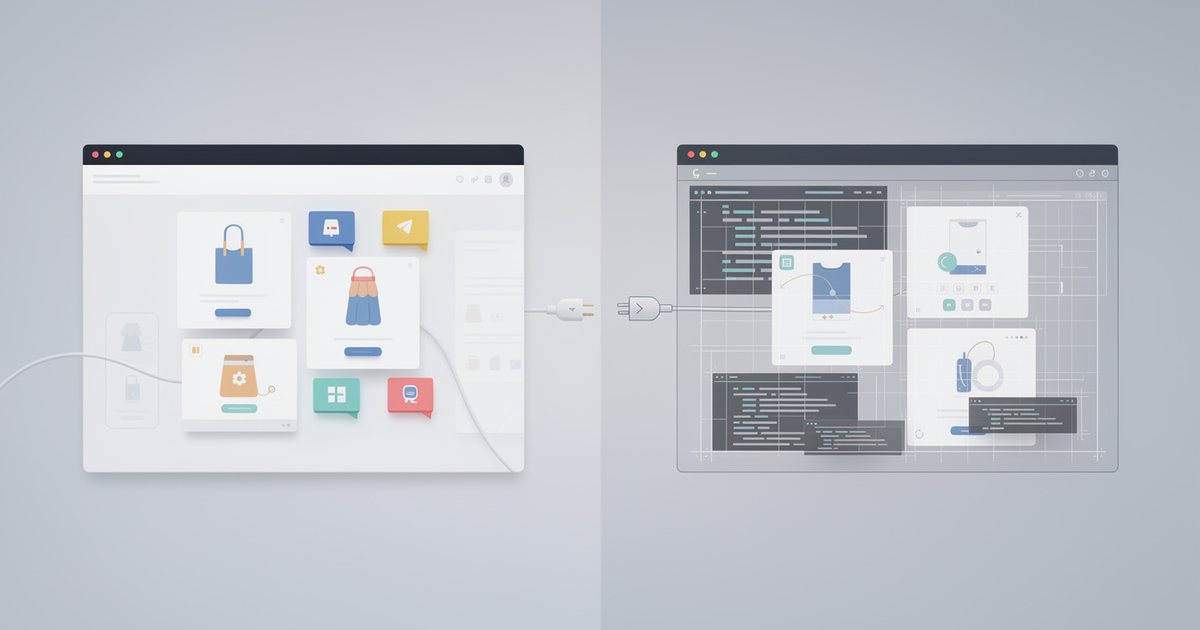
App or Website? When You Actually Need a Mobile App
A practical framework for deciding whether your business needs a mobile app or a good website, with the four options compared and real market scenarios.

For most businesses, the answer to "app or website?" starts with a fast, responsive website, because customers reach it from search, ads and WhatsApp links without installing anything. An app earns its cost when there is repeated use that needs device features, offline access or ongoing contact through notifications. This guide lays out the four options, the questions that settle the decision, and scenarios from the market, so you don't pay for an app nobody opens.
The four options in plain terms
Responsive website
One site that works in any browser on any screen. Search engines can find it, updates reach everyone instantly, and it can be shared as a link. Its limits are restricted access to device features and, usually, no offline use. How to build one well is covered in the guide to responsive web design.
Progressive web app (PWA)
A website with app-like abilities added: it can be installed on the home screen, works partly offline thanks to a service worker that caches pages and data, and can send notifications in many environments. It remains an indexable website and needs no app store. Support for some features, especially notifications and installation, varies between browsers and operating systems, particularly on iOS, so check the current situation before you build a plan around it.
Native app
Built separately for each operating system with its own language and tools: Swift for iOS and Kotlin for Android. It delivers the best performance and the widest access to device features, and it is distributed through the app stores. In practice, though, it means two separate projects with higher build and maintenance costs.
Cross-platform app
One codebase that produces apps for both iOS and Android, using frameworks such as Flutter or React Native. Performance is close to native for most business apps, and it costs less than building two apps, though some special features may still need native code.
| Criterion | Responsive site | PWA | Native app | Cross-platform |
|---|---|---|---|---|
| Access to device features | Limited | Moderate, varies by OS | Full | Nearly full |
| Offline use | Usually none | Partial | Full if designed for it | Full if designed for it |
| Push notifications | No | Possible, support varies | Yes | Yes |
| App store presence | No | Not by default | Yes | Yes |
| Discovery through search | Strong | Strong | Weak | Weak |
| Build and maintenance cost | Lowest | Low to medium | Highest | Medium to high |
| How updates arrive | Instantly | Instantly | Through the store and user updates | Through the store and user updates |
Seven questions that settle it
- How often will customers use it? People install apps they use daily or weekly: food delivery, banking, loyalty programs. A service someone needs once a year, such as booking a maintenance visit or requesting a quote, will not earn an install however polished it is.
- Does it need to work offline? Field maintenance teams, site inspectors and anyone working with poor coverage need to save data and sync it later. Simple needs can be met by a PWA; complex syncing suits native or cross-platform apps.
- Does it need special device features? Browsers can reach the camera, location and more, but features such as background location tracking, advanced Bluetooth, NFC and deep system integration usually need an app. Check browser support for the exact feature before deciding.
- Are notifications central to the service? They are powerful for reminders and re-engagement, but overuse gets apps deleted. In the Gulf and Egypt, customers already open WhatsApp every day, so service messages there plus email may be enough for occasional customers, provided you follow consent rules and the platform's policies.
- Does store presence matter? Being in the app stores builds trust with some audiences, but it means following review policies, and stores may take a commission on digital content and services sold inside the app, so check their current terms.
- What is the real budget? An app is an ongoing product, not a project that ends at launch: operating system updates, changing store requirements, an API and server feeding the app, bug fixes and replies to reviews. Budget a fixed annual amount for maintenance, not a one-off sum.
- How will people find it? Every install has a marketing cost, and the customer has to be persuaded to install before seeing any value, whereas a website opens straight from an ad, a search result or a link in a chat.
Scenarios from the market
- A restaurant selling through delivery apps: a fast website with the menu, a WhatsApp order button and links to the delivery platforms is enough at first. Its own app starts to make sense once there is a large base of repeat customers and a loyalty program worth running directly.
- A new online store: website first, on a hosted platform or a custom build, as discussed in choosing an e-commerce platform. Some platforms offer a ready-made app connected to the store, a sensible middle step before investing in a custom one.
- A clinic or service center: a website with appointment booking and message reminders. An app adds little except for ongoing care or follow-up programs.
- A maintenance company with field technicians: an internal app for staff that works offline, takes photos and captures customer signatures. A cross-platform app or a PWA fits well, because it is deployed on company devices and needs no marketing.
- A real estate developer: a website to showcase projects and attract buyers, then later an app for residents if there are recurring community services such as maintenance requests and access permits.
The staged path: website first, app when needed
- Build a fast, responsive website that covers the whole customer journey, as described in building your business website.
- Add PWA features where they help, such as installation and pages that work offline.
- Measure the signals: the share of mobile visits, how many customers return and how often, explicit requests for an app, and the tasks people repeat.
- Design your systems from the start to serve data through an API, so any future app can use it without a rebuild.
- When the need is clear, launch a first version with the functions customers have proven they repeat, not everything on the website.
Common mistakes
- Building an app because a competitor has one, without repeated use to justify it.
- An app that is just a wrapper around the website. Stores may reject apps with minimal functionality, and users have no reason to keep it.
- Neglecting the website after the app launches, even though new customers mostly arrive through search, ads and shared links.
- Ignoring Arabic layout and the two-language experience inside the app; the rules for a bilingual Arabic–English website apply there too.
- Registering the store developer accounts in an individual's name rather than the company's, so ownership of the app is lost when the contract ends.
- Launching without analytics and crash reporting, so you never learn why users leave.
Quick decision checklist
The more of these statements apply to your business, the stronger the case for an app:
- Customers use your service weekly or more often.
- You need to work offline for long periods or sync complex data.
- You need device features the browser cannot provide reliably.
- Notifications are a core part of the service's value, not just an extra marketing channel.
- You have an annual maintenance budget and a team or partner to keep the app updated.
- You have a clear plan for winning installs and keeping users.
If almost none apply, a good website, with PWA features where useful, is the smarter investment. Speed is decisive on mobile, so work through the guide to website speed before you think about any app.